
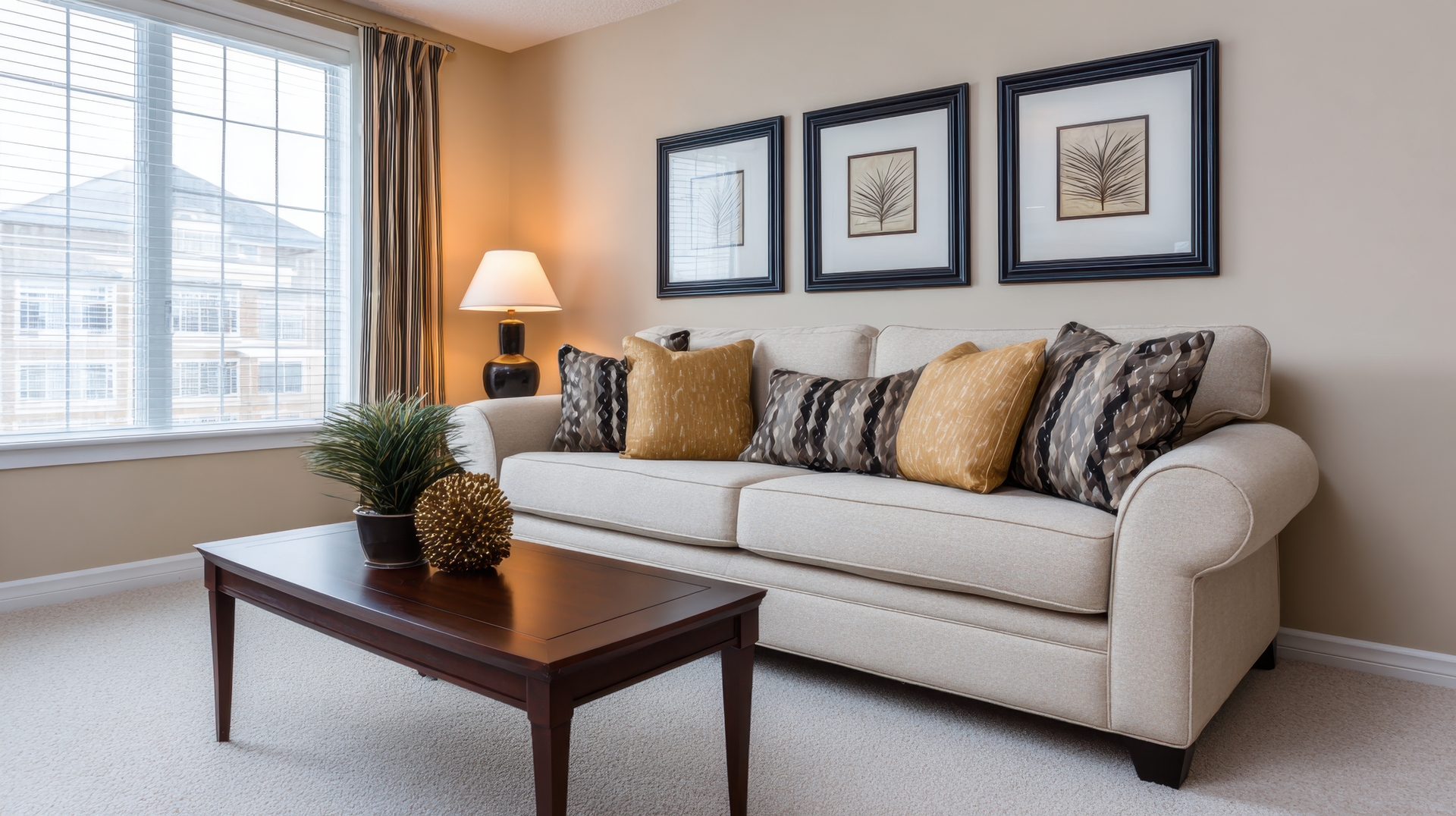
For the better part of two decades, open-plan living and the rise of hardwood sent carpet packing. Out went the plush underfoot softness. In came gleaming wood, cool tile, and the crisp click of heels on hard surfaces. It felt modern. It felt sleek. And for a while, it felt right.
But spend an afternoon scrolling through the latest interior design projects coming out of South Jersey homes, and something has quietly shifted. Carpet is back in the living room, and it is not apologizing for it. It is not the tired beige loop pile of the nineties, either. This is carpet with confidence: rich textures, considered colors, and a design philosophy that positions it as an intentional statement rather than a default choice.
If you have been on the fence about whether carpet belongs in your living room, here is what the design world is saying, and how today's flooring experts are making it work.
Why the living room makes so much sense for carpet
The living room is the room where people actually live. It is where kids spread out on the floor with homework, where you sink into the sofa after a long week, where guests gather and conversations happen. Hard flooring is beautiful, but it is unforgiving. A dropped toy sounds like a crash. Cold mornings feel colder. Sound bounces around in ways that make a room feel less like a haven and more like a hall.
Carpet absorbs all of that. It brings the noise down, the warmth up, and puts a kind of physical softness into a space that hard surfaces simply cannot replicate. Designers have always known this. What changed is that homeowners are finally listening again.
The texture moment that is redefining carpet's role
Here is what is genuinely exciting about carpet in 2025: texture has become the main event. Flat, featureless carpet is yesterday's story. What designers are reaching for now is dimensional, layered, and deeply tactile.
Boucle-inspired loop constructions that echo the popular fabric trend in upholstery. Cut-and-loop patterns that create subtle geometric relief underfoot. High-pile frieze that looks intentionally casual and works beautifully against structured, minimalist furniture. Even low-profile Berber is making a design comeback, styled against warm wood tones and linen in ways that feel entirely fresh.
The texture itself becomes a design element, not just a background. That shift in thinking is what separates how carpet is being used now from how it was used a generation ago.
How designers are layering carpet and rugs together
One of the most interesting moves happening in well-styled living rooms right now is the carpet-on-carpet layer. A wall-to-wall carpet provides the acoustic and comfort foundation, while a large area rug anchors the seating arrangement on top. It sounds like it should not work. It absolutely does.
The key is contrast. A low-profile carpet in a neutral ground tone pairs with a patterned or textured rug in a complementary palette. The rug defines the conversation area, while the carpet holds the whole room together. It also gives homeowners flexibility: the rug can be swapped as styles evolve without touching the underlying flooring.
This layering technique has moved well beyond trend status. Designers treat it as a reliable tool for adding visual depth in rooms where the architecture itself is simple.
What color is doing right now
Greige is still working. Warm taupe, soft sage, dusty slate, and deep charcoal are all showing up in residential projects and holding their own beautifully. What is interesting is the growing confidence around darker carpet in living rooms. Navy, forest green, and rich terracotta are being used in ways that feel cozy rather than heavy, particularly in rooms with good natural light or warm ambient lighting in the evening hours.
The practical advantage here is real. Darker carpets are remarkably forgiving of everyday life. Pet hair, dust, and light foot traffic all but disappear. For households in Cinnaminson and Hamilton that are actually used rather than staged, a deeper palette often means a living room that looks great without constant effort.
The stain resistance conversation has changed
One of the most common hesitations homeowners bring up when considering carpet for living rooms is maintenance. It is a fair concern, and it used to be a legitimate limitation. Today, it is a much weaker argument against carpet than it once was.
Modern fiber technology from brands like Shaw, Mohawk, and Anderson Tuftex has moved well beyond basic stain treatment. Solution-dyed fibers, built-in moisture barriers, and advanced surface treatments mean spills can be blotted away cleanly that would have permanently damaged carpet just ten years ago. Coupled with professional flooring installation that ensures proper seaming and stretch, today's living room carpet can handle real family life without looking like it.
What the design world is actually after
Strip away the specific textures and colors, and what designers are really chasing with carpet in the living room is a feeling. Warmth. Quiet. The sense that a room has been considered from the floor up. Hard flooring delivers a certain kind of beauty, but it does not wrap a room around you. Carpet does.
That is not nostalgia. It is function meeting intention, and it is why the flooring experts and interior designers who pay attention to how people actually live in their homes keep coming back to carpet as a first choice for the spaces that matter most.
Ready to bring that warmth and design intention into your own living room? At Aroma'z Home, our flooring experts have been helping South and Central Jersey homeowners find the right carpet since 1967. Visit our showrooms in Cinnaminson and Hamilton, NJ, or request a free estimate to get started.